Bill and Receipt Organizer KDP Interior: Streamlining Financial Tracking for Low Content Publishers
For entrepreneurs and self-publishers operating in the low or no-content niche, the Bill and Receipt Organizer KDP Interior represents more than just a printable template; it is a foundational asset for building a sustainable product line. This specific interior is engineered to solve a persistent pain point for end-users while providing publishers with a verified, high-quality file structure that eliminates technical friction during the upload process. In a market saturated with generic notebooks, offering a specialized financial tracking tool requires precision in both design and functionality. This organizer serves as a bridge between complex accounting software and the tactile need for physical record-keeping, making it an essential component for creators targeting small business owners, freelancers, and household managers.
The Role of Specialized Interiors in Product Workflows
Integrating the Bill and Receipt Organizer KDP Interior into your publishing workflow begins with understanding its position within the broader ecosystem of financial literacy tools. Unlike blank journals, this interior carries a functional responsibility. It must accommodate real-world data entry scenarios, from logging utility payments to tracking vendor invoices. For the publisher, this means the value proposition is established before marketing even begins. The interior acts as the product’s core utility, dictating the cover design, keyword strategy, and category selection.
When planning a new release, consider how this organizer interacts with existing resources. Many users utilize digital apps for banking but prefer physical logs for tax preparation or budget reconciliation. Your product fills this hybrid gap. By positioning the Bill and Receipt Organizer KDP Interior as a complementary tool rather than a replacement for digital finance, you align with actual user behavior. This practical alignment reduces return rates and increases positive reviews, as customers receive a product that fits seamlessly into their established routines rather than forcing them to adopt an entirely new system.
Technical Specifications and Quality Assurance
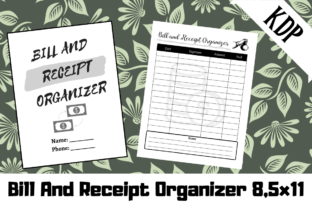
Success on Amazon KDP relies heavily on technical compliance. This specific interior package has been formatted and tested to meet rigorous platform standards, featuring a trim size of 8.5 x 11 inches with no bleed. These specifications are critical for usability. The 8.5 x 11 dimension provides ample horizontal space for writing descriptions, dates, and amounts without cramping, which is a common failure point in smaller financial logbooks. The no-bleed configuration ensures that all content remains safely within the margins, preventing crucial lines or headers from being trimmed during the printing process.
The inclusion of four different variants of PDF files addresses the need for A/B testing and portfolio diversification. Rather than uploading a single static product, publishers can leverage these variants to test market preferences. One variant might feature a minimalist layout appealing to corporate professionals, while another could use bolder headers for users with visual processing preferences. Having pre-tested files significantly reduces the quality control burden. Each of the 120 pages has been verified for resolution and margin safety, allowing you to bypass the tedious trial-and-error phase often associated with creating financial interiors from scratch.
Implementation Strategies for Diverse User Segments
To maximize the reach of your Bill and Receipt Organizer KDP Interior, it is necessary to understand the distinct workflows of your target audience. The versatility of having four layout variants allows you to cater to multiple demographics simultaneously.
- Freelancers and Creatives: This segment often struggles with separating personal and business expenses. They require an interior that facilitates quick categorization. When marketing to this group, emphasize layouts that allow for project-based expense tracking, helping them prepare for quarterly estimated taxes without needing complex spreadsheets.
- Small Business Owners: Retailers and service providers need durability and volume. With 120 pages, this organizer supports several months of daily transactions. For this audience, the focus should be on the consistency of the layout, ensuring that repetitive data entry becomes muscle memory rather than a cognitive chore.
- Household Managers: Budgeting for families involves tracking recurring bills alongside variable expenses. Variants that include sections for "Due Date" and "Paid Date" are particularly valuable here. This demographic values clarity over density, so selecting the variant with the most whitespace is often the best strategic choice.
- Educators and Non-Profit Organizers: Grant tracking and classroom supply reimbursement require strict documentation. These users need a professional aesthetic that can be presented to administrators or auditors. The clean, standard formatting of this interior lends the necessary credibility to their record-keeping efforts.
Optimizing the Pre-Launch and Post-Publication Process
Before uploading, integrate the Bill and Receipt Organizer KDP Interior into a broader content strategy. Because the files are ready for printing, your pre-launch time should be spent on metadata optimization rather than file correction. Analyze search terms related to "expense tracker," "bill payment log," and "small business bookkeeping." Since the interior is already validated, you can create mockups and preview images immediately, accelerating your time-to-market. This speed is vital in low-content publishing, where trends shift seasonally, particularly around tax season and the new fiscal year.
Post-publication, the four variants serve as a mechanism for long-term portfolio management. If sales data indicates that customers prefer a specific column arrangement or header style, you can prioritize that variant in future ad campaigns or bundle creations. Furthermore, user feedback on one variant can inform custom modifications for future products. Treat the initial purchase of this interior not as a final destination, but as a baseline dataset for understanding your niche. The standardized 8.5 x 11 size also makes it compatible with other standard office supplies, such as folder dividers and sheet protectors, which is a selling point worth mentioning in your product description to enhance perceived utility.
Enhancing Usability Through Thoughtful Design Integration
The effectiveness of any financial organizer depends on its adherence to cognitive ergonomics. The Bill and Receipt Organizer KDP Interior is designed to reduce friction during data entry. When evaluating which variant to publish first, consider the writing experience. Lines must be spaced appropriately for handwriting, and columns should be wide enough to accommodate varying digit lengths. A common mistake in low-content books is prioritizing aesthetic density over functional legibility. This interior avoids that pitfall by maintaining a balance between structure and flexibility.
Consider how the physical book interacts with other organizational systems. Users often transfer data from this physical log into digital tax software at the end of the year. Therefore, the categories and columns in the interior should loosely mirror standard accounting fields (Date, Description, Category, Amount, Balance). This interoperability transforms the book from a simple notebook into a legitimate part of a financial workflow. When describing the product, highlight this compatibility. Explain that the 120-page count is calculated to cover a standard quarter or half-year of moderate activity, making it a logical unit of time for organization.
Maintaining Consistency and Brand Authority
For publishers building a brand in the productivity space, consistency is paramount. Using a professionally formatted Bill and Receipt Organizer KDP Interior establishes a baseline of quality that customers will expect from future releases. The no-bleed format and precise 8.5 x 11 trim size should become standard across your financial product line. This uniformity allows customers to stack, store, and reference multiple books together without visual or physical discordance.
Quality control extends beyond the PDF file itself; it encompasses the entire customer experience. Ensure that your cover design accurately reflects the interior layout. Misalignment between cover promises and interior reality is the primary driver of negative feedback in this niche. Since you have four variants available, select cover art that matches the specific tone of the chosen interior. A minimalist cover should pair with a minimalist interior; a bold, colorful cover should pair with a more structured layout. This coherence reinforces trust and signals to the buyer that the product was created with intention and professional oversight.
Ultimately, the Bill and Receipt Organizer KDP Interior is a tool for efficiency on both sides of the transaction. For the publisher, it removes technical barriers and provides versatile assets for testing. For the end-user, it offers a reliable, spacious, and logically structured environment for managing financial obligations. By focusing on practical integration, technical accuracy, and user-centric design, this interior supports a sustainable publishing business model grounded in genuine utility rather than speculative trends. The readiness of the files allows you to focus on what matters most: connecting a well-crafted solution with the people who need it to bring order to their financial lives.