Designing Functional Journals with a Daily Meal Planner Printable Interior
The intersection of digital publishing and personal wellness has created a significant demand for specialized organizational tools. Among these, the meal planner remains a staple for individuals seeking to manage nutrition, budget, and time. For creators utilizing Amazon KDP or selling digital downloads on platforms like Etsy, the quality of the internal layout is just as critical as the cover design. A well-executed Daily Meal Planner Printable Interior serves as the functional backbone of the product, determining whether a customer will repurchase or abandon the journal after a few weeks of use. Understanding the technical specifications, aesthetic variations, and editing capabilities of these interiors is essential for producing a competitive low-content book.
Technical Specifications for KDP and Home Printing
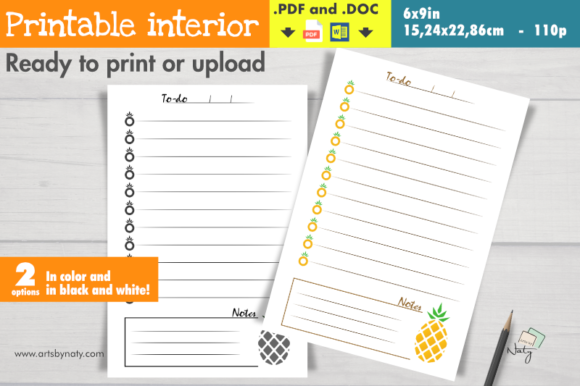
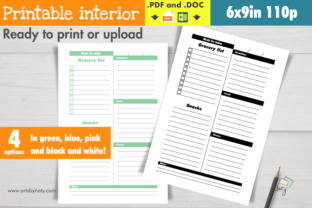
When sourcing or creating a Daily Meal Planner Printable Interior in 4 colors, adherence to print industry standards is non-negotiable. The specific configuration of this interior pack—6x9 inches with 110 pages per file—is optimized for the most popular trim size in the productivity niche. This dimension offers a balance between portability and sufficient writing space, making it ideal for kitchen counters, refrigerator magnets, or carrying in a bag alongside groceries.
The inclusion of four separate PDF files addresses a common pain point in self-publishing: color consistency and file management. By separating the color variants, publishers can upload distinct versions without risking bleed-through issues or color profile conflicts that sometimes occur when combining multiple designs into a single massive document. Furthermore, providing editable DOC files alongside the print-ready PDFs adds a layer of versatility that pure template sellers often lack. The DOC format allows for structural adjustments that PDF editors cannot easily handle, such as changing font families globally or adjusting table margins to accommodate different handwriting sizes.
A critical technical advantage for commercial users is the absence of watermarks. Many interior templates come with restrictive licensing or embedded branding that renders them unsuitable for resale. A clean, watermark-free interior ensures that the final product looks professional and proprietary. This is particularly important for maintaining brand integrity; customers expect a seamless experience from cover to back page, and third-party branding disrupts that immersion.
Customization of Ownership and Legal Pages
The ability to edit the "This notebook belongs to" page and the "Copyright" page transforms a generic template into a branded asset. These two pages serve distinct but equally important functions in the user experience and legal protection of the work.
- The Belongings Page: This is often the first interaction a user has with the interior. In a meal planning context, this page establishes psychological ownership. For educators or nutritionists distributing these planners to clients or students, this section can be customized to include instructions, a welcome message, or specific program branding. Editing this page via the provided DOC file allows for the insertion of logos or personalized text that aligns with the cover design.
- The Copyright Page: Intellectual property protection is vital in the saturated low-content market. While KDP provides basic ISBN assignment, adding a custom copyright page asserts your rights over the specific compilation and design arrangement. Being able to edit this page means you can update the year, add disclaimer language regarding nutritional advice (crucial for health-related planners), and include contact information for customer support or future marketing.
Aesthetic Variations and User Psychology
The provision of four distinct color schemes within a single pack acknowledges that meal planning is not a monolithic activity. Different demographics and user personalities respond to different visual stimuli. When selecting which Daily Meal Planner Printable Interior variant to publish or print, consider the psychological impact of color on habit formation.
Muted, earthy tones often appeal to users focused on organic eating, sustainability, and mindfulness. These colors reduce visual noise and create a calming ritual around planning. Conversely, vibrant primary colors may suit families with children, where the planner serves as a communication tool and an educational aid for healthy eating. High-contrast black and white or grayscale options remain the bestseller for KDP authors because they are cost-effective to print via standard black-and-white ink options while still appearing crisp and professional. Having four options allows a publisher to test multiple niches simultaneously or offer a bundle that caters to varied preferences within a single household.
Simplicity in design is a feature, not a limitation. Overly complex layouts with excessive graphics can reduce the usable writing area and distract from the primary function. A beautiful, simple daily meal planner prioritizes whitespace and clear typography. This ensures that the planner remains functional even during busy weeks when users have minimal time to engage with it. The four-color variation should enhance readability rather than compete with the content the user needs to record.
Practical Applications Across Demographics
The utility of a structured meal planning interior extends far beyond individual weight loss goals. Understanding the diverse use cases helps in crafting better metadata, descriptions, and marketing angles for the finished product.
Nutrition Professionals and Dietitians: Practitioners often require standardized tools to assign to clients. A 110-page planner provides roughly three to four months of tracking, which aligns with typical coaching cycles. The editable nature of the interior allows professionals to insert their practice’s logo and specific dietary guidelines directly into the ownership page, turning a commodity product into a value-added service tool.
Educators and School Programs: Home economics classes and after-school nutrition programs utilize meal planners to teach budgeting and nutritional balance. The 6x9 size is appropriate for younger hands, and the simple layout prevents cognitive overload. Teachers can customize the copyright or intro pages to include lesson objectives or grading rubrics if used as part of a curriculum.
Busy Families and Caregivers: For households managing multiple dietary restrictions or allergies, a printed planner serves as a central command center. The ability to print at home using the provided PDF files means caregivers can reprint specific months or sections as needed without purchasing a new book. This flexibility is a significant selling point for digital downloads aimed at family organizers.
KDP Publishers and Side Hustlers: For entrepreneurs, this interior pack represents a scalable asset. Because the files are ready for upload, the time-to-market is significantly reduced. The four-color variety allows for the creation of a series (e.g., "Spring Edition," "Summer Edition") without requiring new design work. The 110-page count hits the sweet spot for spine width on KDP, allowing for legible text on the binding, which improves shelf visibility and perceived value compared to thinner notebooks.
Workflow Integration and File Management
Maximizing the value of this interior pack requires an efficient workflow. Since the package includes both PDF and DOC formats, users should establish a clear protocol for which file type to use based on their end goal.
For direct KDP upload or immediate home printing, the PDF files are the correct choice. These files typically have flattened layers and embedded fonts, ensuring that the layout remains consistent regardless of the device or printer used. Before uploading, it is best practice to download the KDP Previewer tool to check for margin warnings, especially since meal planners often utilize the full width of the page for tables. The 6x9 dimension with 110 pages should fit comfortably within standard safe zones, but verification prevents costly proofing errors.
For customization, branding, or structural changes, the DOC files are necessary. Users should open these in Microsoft Word or a compatible processor to make edits. It is advisable to save the edited version as a new PDF before uploading to KDP, as Word documents can reflow differently depending on the version and operating system. When editing the "This notebook belongs to" page, ensure that any added graphics are high-resolution (300 DPI) to avoid pixelation in print. Similarly, when updating the copyright page, verify that the text alignment matches the rest of the interior to maintain a cohesive professional appearance.
Organizing these assets is also part of the workflow. Maintaining a clear folder structure that separates the master DOC files from the print-ready PDFs prevents accidental overwrites. Naming conventions should reflect the color variant and version number to track updates over time. For those building a business around printable interiors, keeping a changelog of edits made to the copyright or intro pages ensures consistency across future editions.
Considerations for Long-Term Usability
While the immediate readiness of this Daily Meal Planner Printable Interior is a major benefit, long-term success depends on how the product adapts to user feedback and market shifts. The simple design philosophy embedded in this pack supports longevity because it avoids trendy elements that date quickly. However, publishers should monitor reviews and user comments to identify potential improvements for future iterations.
Paper quality is another consideration linked to the interior design. If printing at home, users should be advised on paper weight; standard 20lb copy paper may show through with certain markers or gel pens, especially with colored interiors. Suggesting 28lb or 32lb paper in product descriptions can enhance user satisfaction. For KDP users, understanding that Amazon’s standard color paper is lighter than premium options helps in setting expectations. The four-color variants should be tested on both paper types to ensure the darker colors do not appear muddy or cause bleed-through issues.
Ultimately, the value of this interior pack lies in its balance of convenience and customizability. It removes the barrier to entry for aspiring publishers while providing enough flexibility for established professionals to create a unique product. Whether used for personal organization, client management, or commercial publishing, the combination of technical readiness, aesthetic variety, and editable components makes it a comprehensive solution for the meal planning niche. By focusing on the practical application and respecting the technical requirements of print media, users can transform these digital files into tangible tools that support healthier, more organized lifestyles.