Gratitude Journal KDP Template: No Bleed Design Guide
Building a sustainable low-content publishing business requires more than just uploading generic files; it demands thoughtful design and technical precision. A high-quality Gratitude Journal KDP Template serves as the foundational architecture for creators looking to enter the mindfulness niche without spending weeks on layout design. This specific 6″ x 9″ no bleed template offers a streamlined path to publication, balancing aesthetic appeal with the strict technical requirements of Amazon’s printing platform. For entrepreneurs, educators, and designers, this resource eliminates the guesswork associated with margins and safe zones, allowing you to focus on branding and market positioning.
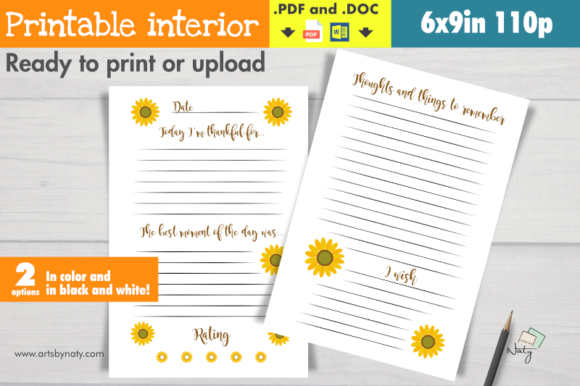
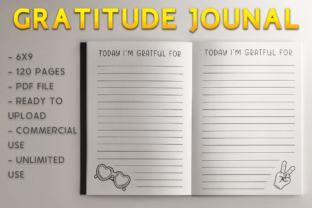
The value of this template lies in its immediate usability and structural integrity. With 120 pages comprising four distinct interior designs, it provides enough variety to create a premium user experience while maintaining consistency throughout the book. The "no bleed" specification is particularly crucial for new publishers. It ensures that all text and graphical elements remain safely within the printable area, preventing costly formatting errors or rejected uploads. By starting with a professionally formatted PDF, you secure a baseline of quality that resonates with customers seeking functional, well-crafted tools for their daily practice.
Strategic Adaptation for Diverse Niches
While the core structure of a gratitude journal remains consistent, successful KDP products often target specific sub-niches rather than the broad "gratitude" category. This template acts as a versatile canvas that can be adapted for various audiences. Marketers and bloggers can leverage these interiors to create lead magnets or companion workbooks for wellness courses. By customizing the cover and title page, the same internal framework can serve vastly different demographics.
- Mental Health Professionals: Therapists and counselors can use this template to create structured homework journals for clients. The four different designs allow for varied prompts that encourage cognitive reframing and positive psychology exercises.
- Educators and Teachers: Create classroom-specific gratitude logs for students. The 6x9 size is portable enough for backpacks, and the clean layout helps children and teens develop reflective habits without feeling overwhelmed by complex designs.
- Corporate Wellness Programs: HR departments and coaches can brand these journals for employee gifting. The professional, uncluttered aesthetic suits corporate environments better than overly ornate spiritual designs.
- Niche Hobbyists: Combine gratitude with specific interests like gardening, recovery, or new parenthood. The neutral interior allows the cover art to do the heavy lifting of niche signaling while the content remains universally applicable.
Adapting the template does not always require altering the PDF itself. Often, strategic titling and cover design are sufficient to reposition the product. However, for those with design skills, the PDF serves as a master file that can be annotated or expanded upon to add proprietary value, such as weekly check-ins or monthly reflection sections inserted between the standard layouts.
Understanding the Technical Advantages
Technical proficiency distinguishes professional publishers from amateurs. Understanding why this Gratitude Journal KDP Template utilizes a no bleed design is essential for long-term success. In KDP terminology, "bleed" refers to images or colors that extend to the very edge of the paper. While visually striking, bleed designs require precise trimming and larger file dimensions. A no bleed design keeps all content within a defined safe zone, typically leaving a white margin around the perimeter.
This approach offers several practical benefits for low-content creators. First, it significantly reduces the risk of rejection during the automated review process. Misaligned bleeds are a common cause of publishing delays. Second, it ensures readability. Text placed too close to the gutter or outer edge can be difficult to read once the book is bound. This template’s 6″ x 9″ dimensions with pre-set margins guarantee that every prompt and line is legible and aesthetically balanced. For creators producing multiple books, this reliability speeds up the production workflow, allowing for faster iteration and testing of new keywords and covers.
Maximizing the Four Interior Designs
A common pitfall in low-content publishing is repetitive interiors that cause user fatigue. This template addresses that issue by including four unique design variations across 120 pages. Smart publishers utilize this variety to enhance the perceived value of the book. Rather than arranging them randomly, consider organizing the journal logically to guide the user through a progression of reflection.
You might structure the book so that each design corresponds to a different type of entry. One layout could focus on morning intentions, another on evening reflections, a third on listing specific gratitudes, and a fourth on free-form journaling or doodling. This intentional curation transforms a simple notebook into a guided system. When writing your book description, highlight this structural variety as a key feature. Customers are more likely to purchase a journal that feels like a comprehensive tool rather than a stack of identical blank pages. The variation also provides excellent opportunities for "Look Inside" preview images, showcasing the depth of content available to the buyer.
Creative Expansion and Value Addition
To stand out in a competitive marketplace, consider how this template can be part of a larger ecosystem. Freelancers and small business owners can use the Gratitude Journal KDP Template as a base product while developing complementary digital assets. For example, you could create a printable PDF version of the same interiors for Etsy customers who prefer digital planning on tablets. This maximizes the return on investment for a single design asset.
Additionally, think about the user journey beyond the physical pages. Include a QR code on the first or last page (within the safe zone) that links to a newsletter, a meditation audio track, or a community group. This turns a static print product into a dynamic touchpoint for audience building. Educators might link to lesson plans, while wellness coaches could link to booking pages. The key is to ensure any added elements respect the no bleed constraints and enhance rather than distract from the primary purpose of the journal.
Best Practices for Upload and Optimization
When preparing this instant download PDF for KDP, accuracy is paramount. Select the 6″ x 9″ trim size and explicitly choose the "No Bleed" option in the setup wizard. Even though the file is pre-formatted, always order a proof copy before launching. Digital previews cannot fully replicate how ink sits on paper or how the binding affects the inner margin. Checking the physical proof ensures that the writing space is adequate and that the four designs transition smoothly.
From an SEO perspective, describe the utility of the journal rather than just its physical attributes. Use natural language that addresses user intent, such as "daily mindfulness practice," "structured reflection prompts," or "portable wellness journal." Avoid keyword stuffing in your metadata. Instead, weave relevant terms into a compelling narrative about how the book facilitates gratitude. Remember that helpful content prioritizes the reader's experience. Your description should clearly explain how the four designs function and why the 6x9 format is ideal for daily carry. By combining technical correctness with user-centric marketing, you position your product as a credible solution in the self-care space.
Ultimately, this template represents efficiency without sacrificing quality. It allows creators to bypass the steep learning curve of book formatting and move directly to the creative aspects of publishing. Whether you are building a portfolio of low-content books, creating resources for a coaching business, or simply exploring self-publishing, starting with a robust, no bleed foundation ensures your final product meets professional standards. The intersection of smart design and practical application is where sustainable publishing businesses are built, and this gratitude journal template provides exactly that intersection.