Evaluating the Kids Maze Book KDP Template for Self-Publishing
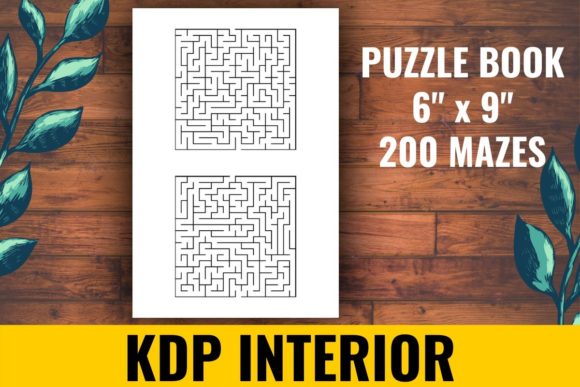
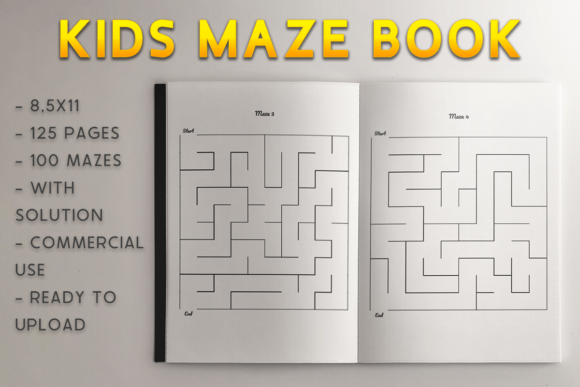
The low-content and no-content publishing sector on Amazon Kindle Direct Publishing (KDP) has matured significantly, shifting from simple notebook interiors to more specialized activity books. Among these, the Kids Maze Book KDP Template represents a specific category of pre-formatted interior designed to streamline the creation of puzzle books. This particular template offers a standardized 8.5 x 11-inch format with a no-bleed design, comprising 125 pages that include 100 individual mazes and a solution key. For publishers evaluating whether to integrate this asset into their catalog, understanding its structural utility, market positioning, and inherent limitations is essential for making an informed investment decision.
Defining the Asset and Its Structural Role
A Kids Maze Book KDP Template is fundamentally a production accelerator. It is a ready-to-upload PDF file that eliminates the technical learning curve associated with puzzle generation and book formatting. Unlike raw maze generators that output single images requiring manual layout, this template provides a complete manuscript structure. The specific configuration of this product—100 easy mazes distributed across 100 pages with solutions occupying the remaining space—targets a precise demographic: early learners and young children developing fine motor skills and problem-solving abilities.
The "no bleed" specification is a critical technical detail for evaluation. In KDP terminology, no bleed means the content does not extend to the very edge of the paper; instead, it maintains a safe margin. This design choice reduces printing errors and ensures compatibility with standard KDP paperback options without requiring complex trim adjustments. For publishers new to activity books, this safety margin minimizes the risk of rejected files or poor customer experiences caused by content being cut off during the binding process.
Strategic Benefits for Low-Content Publishers
The primary value proposition of this template lies in time efficiency and technical compliance. Creating 100 unique, age-appropriate mazes manually is labor-intensive, and automating the process often requires software subscriptions or coding knowledge. By utilizing a pre-made Kids Maze Book Template, publishers bypass the creation phase entirely, moving directly to cover design and keyword research. This allows for rapid portfolio expansion, enabling creators to test multiple niches within the kids' activity category without significant upfront time expenditure.
Furthermore, the standardized page count of 125 pages hits a sweet spot for perceived value and printing costs. Books in this range are substantial enough to justify a competitive price point while keeping royalty margins healthy. The inclusion of a solution section at the end adds functional completeness to the product, which is a baseline expectation for buyers in this niche. Omitting solutions often leads to negative reviews, so having them pre-integrated addresses a common quality control issue in low-content publishing.
Tradeoffs and Market Saturation Considerations
While the barrier to entry is lowered, the tradeoff is reduced differentiation. Because templates like this are accessible to many publishers, the marketplace can become saturated with identical interiors. If a publisher uploads this Kids Maze Book KDP Template without modification, their product will be indistinguishable from dozens of others. This reality necessitates a shift in strategy: the interior becomes a commodity, and success depends almost entirely on external factors such as cover design, branding, and niche targeting.
Publishers must also consider the "easy" difficulty rating. While appropriate for toddlers and preschoolers, this limits the total addressable market. Older children or advanced puzzlers will find the content lacking, potentially resulting in returns or negative feedback if the book’s description does not clearly communicate the difficulty level. Additionally, reliance on a static PDF means there is no flexibility to adjust margins, font sizes, or maze complexity. If future KDP guidelines change or if user feedback suggests a need for larger print, the publisher cannot edit the source file and must instead seek a new template.
Ideal Use Cases and Target Audience Alignment
This specific Maze For Kids Book Template is best suited for three distinct publisher profiles. First, it serves beginners who need to learn the KDP upload workflow without the added complexity of custom formatting. Second, it benefits high-volume publishers who treat activity books as part of a broader portfolio strategy where speed of execution outweighs bespoke craftsmanship. Third, it is valuable for educators or parents creating supplemental materials for personal or classroom use, where commercial uniqueness is less relevant than immediate availability.
The template also aligns well with seasonal or thematic publishing strategies. Because the interior is generic, it can be repurposed for various holidays or events simply by changing the cover and title. A "Summer Travel Activity Book" and a "Winter Break Brain Teasers" book can share this exact same interior, maximizing the return on the initial template acquisition. This versatility makes it a practical foundational asset for publishers focusing on trend-based marketing rather than evergreen brand building.
When to Consider Alternatives
Despite its utility, this template is not the optimal choice for every scenario. Publishers aiming to build a premium, long-term brand in the children's education space should likely avoid unmodified templates. Building a loyal readership requires consistent quality and unique value propositions that stock templates cannot provide. In such cases, investing in custom illustration, proprietary maze algorithms, or hybrid activity books that combine mazes with coloring and learning exercises yields better long-term results.
Additionally, if the target audience includes children aged 7 and above, this "easy" template will be insufficient. Publishers targeting older demographics should seek templates labeled "medium" or "hard," or those that offer variable difficulty progression. Similarly, authors intending to sell expanded distribution copies or hardcover editions may require bleed designs to meet different printing specifications. Evaluating the specific technical requirements of your intended distribution channels is necessary before committing to a no-bleed PDF.
Practical Decision-Making Framework
When deciding whether to utilize this Kids Maze Book KDP Template, publishers should conduct a brief competitive audit. Search Amazon for "easy maze book for kids ages 4-6" and analyze the top ten results. If the majority appear to use identical stock interiors, the niche may be oversaturated, and differentiation through cover art alone might be difficult. However, if existing books have poor covers or outdated metadata, using this template with superior packaging could capture market share.
Ultimately, the decision should hinge on resource allocation. If time is the limiting factor and capital is available, purchasing this template is a rational exchange. If budget is tight but time is abundant, learning to generate custom mazes may offer better long-term ROI. For those proceeding with this template, success will depend on treating it as a starting point rather than a finished product. Combining the efficient interior with exceptional cover design, accurate keyword targeting, and clear communication regarding difficulty level transforms a generic asset into a viable commercial offering in the competitive landscape of KDP activity books.