Gardening Journal Printable Interior: Streamlining KDP Publishing Workflows
For self-publishers and digital product creators, the bottleneck is rarely the idea; it is often the execution of a high-quality interior that meets technical specifications while offering genuine utility to the end user. The Gardening Journal Printable Interior serves as a foundational asset in the low-content and medium-content publishing workflow. Rather than spending dozens of hours designing grids, photo placeholders, and tracking tables from scratch, publishers can integrate this pre-formatted 6x9 inch template directly into their production pipeline. This resource is specifically engineered for Amazon KDP upload or print-on-demand services, bridging the gap between creative concept and market-ready product.
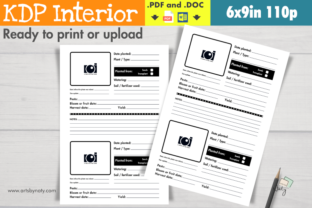
This specific interior package includes a 110-page PDF ready for immediate upload, alongside an editable DOC file. This dual-format approach addresses two distinct phases of the publishing process: rapid deployment and brand customization. By utilizing a dedicated gardening tracker with integrated space for plant photography, the journal moves beyond generic note-taking. It targets a specific niche audience—gardeners who need to document visual progress alongside data points like watering schedules, soil pH, and harvest yields. Understanding how to leverage this asset effectively requires looking at it not just as a file, but as a component within a larger business system.
Pre-Publication Preparation and Customization
Before uploading any interior to KDP, establishing ownership and brand consistency is critical. While the core 110 pages are locked to ensure formatting integrity across different devices and printers, the included DOC file provides necessary flexibility. This editable document contains the "This notebook belongs to" page and the Copyright page. These are the primary touchpoints for branding.
In a professional publishing workflow, you should treat these editable pages as your metadata hub. Use the copyright page to include your publisher imprint, website URL, social media handles, and ISBN information if you have already assigned one. For creators building a series of gardening-related journals, this is where you establish series continuity. You might add a QR code linking to a companion blog post about seasonal planting or a newsletter signup. Because the main content is a fixed PDF, editing the DOC file allows you to update front matter for future editions without risking the alignment of the complex tracking tables in the body of the book.
The absence of watermarks on this product is a significant operational advantage. Many commercial-use templates require attribution or retain visible branding that conflicts with your own. With a clean, watermark-free interior, the final product appears entirely proprietary to your publishing house. This professionalism is essential for competing in saturated niches where customers scrutinize "Look Inside" previews before purchasing.
Technical Integration with Print-on-Demand Platforms
The 6x9 inch trim size is the industry standard for trade paperbacks in the gardening and hobbyist category. It offers enough surface area for detailed writing and photos while remaining portable enough for field use. When integrating this Gardening Journal Printable Interior into your KDP dashboard, technical precision prevents costly proofing errors.
The provided PDF is formatted to standard bleed and margin requirements for this trim size. However, workflows vary between platforms. If you are expanding distribution beyond Amazon to platforms like IngramSpark or Lulu, always verify the safe zone margins. The dedicated photo spaces in this journal are positioned to account for binding gutter loss, ensuring that when a user pastes a polaroid or prints a picture directly onto the page, it does not get swallowed by the spine. This foresight in design reduces customer returns due to usability issues.
When uploading, select "Black & White Interior" with "White Paper." Although the journal tracks colorful plants, the interior structure is designed for grayscale printing to keep production costs low and royalties high. The layout relies on line weight and spacing rather than color blocks to define sections. This cost-efficiency is vital for pricing strategy. A lower printing cost allows you to price the journal competitively against traditional offset-printed competitors while maintaining a healthy profit margin.
Niche Utility and End-User Value Proposition
To market this journal effectively, one must understand the functional workflow of the target demographic. Gardeners do not merely write diaries; they manage biological projects. The inclusion of dedicated photo space distinguishes this tracker from a standard notebook. In practice, users utilize this feature to document plant health over time, compare growth stages, or record pest damage for later identification.
The structured layout supports data-driven gardening. Users can track variables such as sunlight exposure, fertilizer type, and watering frequency next to visual evidence. For your marketing copy and product description, highlight this synthesis of qualitative and quantitative tracking. Explain that this is a tool for experimentation and learning, not just memory keeping. This positions the product as an educational aid rather than a simple stationery item, appealing to serious hobbyists, master gardener students, and homesteaders who view their garden as a system to be optimized.
Furthermore, the 110-page count is calibrated for a full growing season. It provides sufficient volume for daily or weekly entries without making the book unwieldy. This specific page count also hits a sweet spot for perceived value; it feels substantial in hand but remains lightweight for carrying outdoors. When describing the product, emphasize this balance of capacity and portability as a deliberate design choice intended to fit into active gardening routines.
Workflow Efficiency and Asset Management
For publishers managing multiple titles, efficiency comes from standardized assets. This Gardening Journal Printable Interior functions as a modular block in your catalog. Because the core content is evergreen, it does not require annual updates like a dated planner. You can create this listing once and maintain it indefinitely with minimal upkeep.
Consider how this asset interacts with your broader content ecosystem. If you run a gardening blog or YouTube channel, this journal serves as a physical extension of your digital content. You can reference specific page layouts in your videos or articles, demonstrating exactly how to use the tracker to solve common problems like blossom end rot or inconsistent germination. This cross-pollination drives traffic from your free content to your paid products. The editable front matter facilitates this link, turning the book into a lead generation tool or a community-building anchor.
Organizationally, keep your source files segregated. Maintain a master folder containing the original unedited DOC and PDF. Create separate working folders for each variation or edition you publish. If you decide to create a specialized version later—for example, a "Vegetable Garden" edition versus an "Orchid Care" edition—you can modify the title page and copyright info in the DOC file while retaining the universal tracking pages of the PDF. This modularity maximizes the return on investment for a single interior asset.
Quality Control and Long-Term Usability
Even with a ready-made interior, quality control remains the publisher's responsibility. Before launching, order a physical proof. Digital previews cannot replicate the tactile experience of writing in a garden journal. Check the paper opacity; ensure that gel pens or markers used for labeling photos do not bleed through excessively. Verify that the photo boxes are large enough for standard snapshot sizes. Test the binding to ensure the book lays flat or opens easily, as gardeners often need to reference the journal while their hands are occupied.
User feedback loops are essential for long-term success. Monitor reviews specifically for comments regarding the layout's functionality. Do users wish for more space for notes? Is the photo box too small? While you cannot alter the PDF for existing listings, this data informs future product development. Perhaps your next iteration will include a supplemental insert or a completely new interior based on these insights. Treat this current Gardening Journal Printable Interior as version 1.0 in an iterative product development cycle.
Consistency in branding across your catalog builds trust. If a customer buys this gardening journal and loves the paper quality and layout logic, they are likely to purchase your other nature-themed notebooks. Using standardized interiors helps create a cohesive user experience. The clean, watermark-free aesthetic ensures that your brand identity remains the focal point, reinforcing your reputation as a provider of high-quality, practical tools for enthusiasts.
Strategic Implementation for Diverse Creators
This resource is not limited to solo authors. Educators and workshop leaders can utilize this interior as course material. A permaculture design instructor might bundle this journal with a curriculum, using the structured pages as homework assignments. Freelancers and virtual assistants specializing in author services can offer this as a white-label solution for clients entering the gardening niche. The editable DOC file makes it easy to transfer rights or customize for client-specific needs without redesigning the entire book.
For marketers and bloggers, this journal represents a tangible monetization strategy that complements affiliate income. Instead of only earning commissions on seeds and tools, you capture revenue from the planning and documentation phase of the gardener's journey. The practical nature of the content aligns perfectly with informational intent search queries. When someone searches for "how to track tomato blight," a journal specifically designed for that purpose offers a direct solution.
Ultimately, the value of this Gardening Journal Printable Interior lies in its ability to accelerate time-to-market while maintaining professional standards. It removes the technical friction of interior design, allowing creators to focus on audience building, keyword research, and community engagement. By treating this template as a strategic asset rather than a commodity, publishers can build sustainable, scalable businesses in the competitive world of low-content publishing. The combination of ready-to-upload convenience and customizable branding elements provides the flexibility needed to adapt to market trends while delivering consistent value to the end user.