Daily Wellness Journal: A Practical Tool for Self-Care and KDP Publishing
In an era defined by digital saturation and relentless productivity metrics, the act of slowing down to document personal health has shifted from a niche hobby to a fundamental component of sustainable living. The Daily Wellness Journal represents more than just a notebook; it is a structured framework for mindfulness that bridges the gap between physical health tracking and mental clarity. For professionals, creators, and entrepreneurs navigating high-pressure environments, this tool offers a tangible method to reclaim agency over daily habits. Simultaneously, for independent publishers and content creators, the specific architecture of this journal presents a strategic opportunity within the Amazon KDP ecosystem, combining user-centric design with accessible production workflows.
The Evolution of Personal Health Tracking
The landscape of self-improvement has undergone a significant transformation over the last decade. While early wellness trends often focused on aesthetic goals or extreme discipline, current market preferences emphasize holistic sustainability and mental resilience. Modern users are less interested in punitive tracking and more focused on awareness and incremental improvement. This shift is directly reflected in the layout of effective wellness journals. Rather than empty lined pages that demand unstructured introspection, today’s most successful journals provide guided prompts that reduce cognitive load.
This evolution aligns with broader changes in how adults aged 20 to 50 manage their lives. Freelancers and business owners often blur the lines between work and rest, making intentional boundaries necessary. A well-designed journal acts as an external hard drive for the brain, offloading the mental effort of remembering water intake, medication schedules, or sleep patterns. By systematizing these micro-decisions, individuals free up mental bandwidth for creative and professional endeavors. The relevance of the Daily Wellness Journal lies in its ability to serve as both a health record and a mindfulness anchor in a fragmented world.
Anatomy of a Functional Wellness Journal
Functionality dictates form in low-content publishing. A journal that fails to accommodate real-world usage will inevitably be abandoned. The specific configuration of this Daily Wellness Journal addresses common friction points found in generic notebooks. With a total of 95 pages, the book is substantial enough to establish a habit but compact enough to remain portable at 6x9 inches.
The interior structure is meticulously organized to support consistency:
- Goal Setting Foundation: Before the daily practice begins, a dedicated page for goals and measurements allows users to define success on their own terms. This prevents aimless journaling and provides a benchmark for progress.
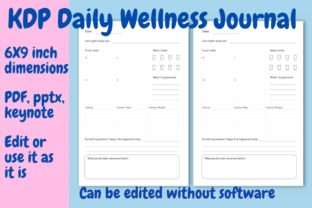
- Daily Reflection Architecture: Each of the 88 daily journalling pages is designed with intention. The top left space for dating creates chronological order, while the empty space at the top right invites personalization through quotes or illustrations, fostering a sense of ownership.
- Holistic Health Metrics: Recognizing that wellness is multifaceted, each spread includes specific sections for recording last night’s sleep quality, two distinct tables for meals and exercise, and trackers for water intake and medications or supplements. This eliminates the need for separate apps or logs.
- Positive Psychology Integration: Crucially, the layout moves beyond mere data entry. Prompts for "something positive that happened today" and "how tomorrow would be better" encourage cognitive reframing. This transforms the journal from a clinical log into a tool for emotional regulation and optimism.
- Flexible Note-Taking: Four lined pages at the end provide overflow space for brainstorming, monthly reviews, or unstructured thoughts, acknowledging that linear tracking does not always capture the full human experience.
This black-and-white, no-bleed interior is not only aesthetically clean but also economically optimized. The printing cost sits at a manageable $2.15 USD on white paper, allowing for competitive pricing while maintaining healthy royalty margins. This balance of utility and economic viability is essential for long-term success in the KDP marketplace.
Accessible Design Workflows for Modern Creators
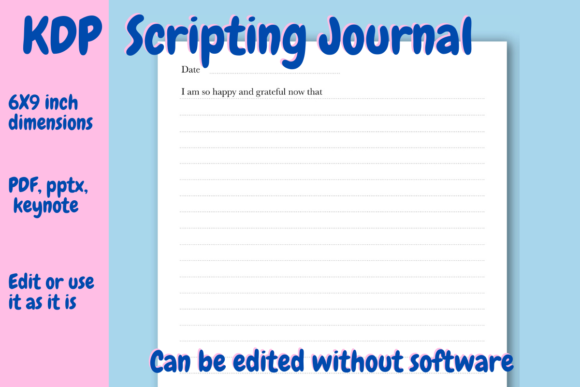
One of the most significant barriers to entry in self-publishing has been technical proficiency. Historically, creating a print-ready interior required expensive software like Adobe InDesign or a steep learning curve. However, the democratization of design tools has leveled the playing field. This Daily Wellness Journal template embraces this accessibility by providing source files in PDF, Keynote, and PowerPoint formats.
The inclusion of a PowerPoint file formatted specifically for Google Slides is a game-changer for creators without specialized design software. This workflow acknowledges the reality that many aspiring publishers operate on lean budgets and rely on cloud-based tools. The process is remarkably straightforward:
- Upload the provided .pptx file to Google Drive.
- Open the file using Google Slides.
- Edit text, adjust layouts, or add branding elements directly in the browser.
- Download the final version as a PDF ready for KDP upload.
This compatibility ensures that anyone with a free Gmail account can customize and publish a professional-grade journal. It removes the gatekeeping associated with desktop publishing and empowers educators, bloggers, and marketers to create branded merchandise or lead magnets without overhead costs. Furthermore, the copyright page is pre-formatted, requiring only the addition of your brand name, streamlining the path from concept to live listing.
Strategic Implications for KDP Publishers
For those utilizing this journal as a product rather than a personal tool, understanding the intersection of design specifications and market demand is critical. The 6x9 inch dimension remains the industry standard for trade paperbacks because it fits comfortably in bags and on bedside tables. Adhering to this size reduces friction for potential buyers who have established expectations for portable journals.
The decision to utilize a black-and-white interior with no bleed is strategically sound for several reasons. First, it ensures consistent printing quality across different Amazon facilities. Bleed issues are a common source of rejected manuscripts or poor customer reviews; eliminating bleed mitigates this risk entirely. Second, the lower printing cost of $2.15 allows publishers to price the journal competitively against mass-market alternatives while still earning meaningful royalties. In a saturated market, margin flexibility can be the difference between a hobby and a viable business stream.
Moreover, the content structure supports SEO and discoverability. When describing this product, publishers can naturally target semantic keywords related to sleep tracking, gratitude practice, meal planning, and mindfulness. Because the journal physically contains these features, the marketing claims are substantiated by the product itself, adhering to Google’s E-E-A-T principles. Authenticity matters; customers are increasingly adept at identifying low-effort cash grabs versus genuine tools. The thoughtful inclusion of specific tracking tables and positive psychology prompts signals to both algorithms and humans that this is a resource designed with care.
Integrating Analog Habits in a Digital Workflow
While the creation and distribution of this journal are facilitated by digital technology, its value proposition is inherently analog. For the target demographic of professionals and creators, screen fatigue is a genuine occupational hazard. The Daily Wellness Journal offers a sanctioned break from blue light. Writing by hand has been shown to improve memory retention and emotional processing in ways that typing cannot replicate.
This hybrid approach—using digital tools to create and distribute an analog solution—mirrors the modern workflow. Entrepreneurs may use AI to draft blog posts and automation to handle email, but they still crave tactile experiences for reflection. By positioning this journal as a complement to digital productivity systems rather than a competitor, publishers can appeal to tech-savvy audiences who understand the limits of optimization. The journal becomes the "offline mode" for personal development, a necessary counterweight to the efficiency of apps and notifications.
Practical Recommendations for Users and Sellers
Whether you are adopting this journal for personal growth or adapting it for sale, intentionality is key. For personal users, the recommendation is to start small. Utilize the sleep and water trackers first before attempting to fill every section. Consistency beats comprehensiveness. Use the "tomorrow would be better" prompt not as a critique of today’s failures, but as a gentle planning tool to reduce morning anxiety.
For KDP sellers, leverage the editable nature of the source files to create niche variations. A fitness coach might emphasize the exercise tables; a mental health advocate might expand the gratitude section. The ability to edit in Google Slides means you can test different angles without reinventing the wheel. Always ensure your copyright page reflects your unique brand identity to build recognition over time.
Ultimately, the Daily Wellness Journal serves as a testament to the enduring human need for reflection and order. In a world that constantly demands more output, taking five minutes to record sleep, acknowledge a positive moment, and plan for a better tomorrow is a radical act of self-preservation. For creators, facilitating this act through accessible, well-designed publishing tools is a service that extends far beyond the transactional nature of e-commerce. It is a contribution to the collective well-being of a generation seeking balance in an unbalanced world.